Storm damage repair Peoria IL homeowners need every spring looks different from what Gig Harbor WA homeowners face during Pacific Northwest storm season, but the underlying damage patterns, and the mistakes people make responding to them, are remarkably similar in both regions.
Homeowners searching for storm damage repair Peoria IL services should understand that rapid response is one of the biggest factors affecting repair costs, structural damage, and insurance outcomes after severe weather.
This guide covers what storm damage actually does to a home, why the response window matters more than most people realize, and what a proper repair process looks like from day one through full restoration.
How Storm Damage Repair Peoria IL Differs from Pacific Northwest Storm Recovery
Understanding what kind of storm you’re dealing with is the first step to understanding what kind of damage to look for and where.
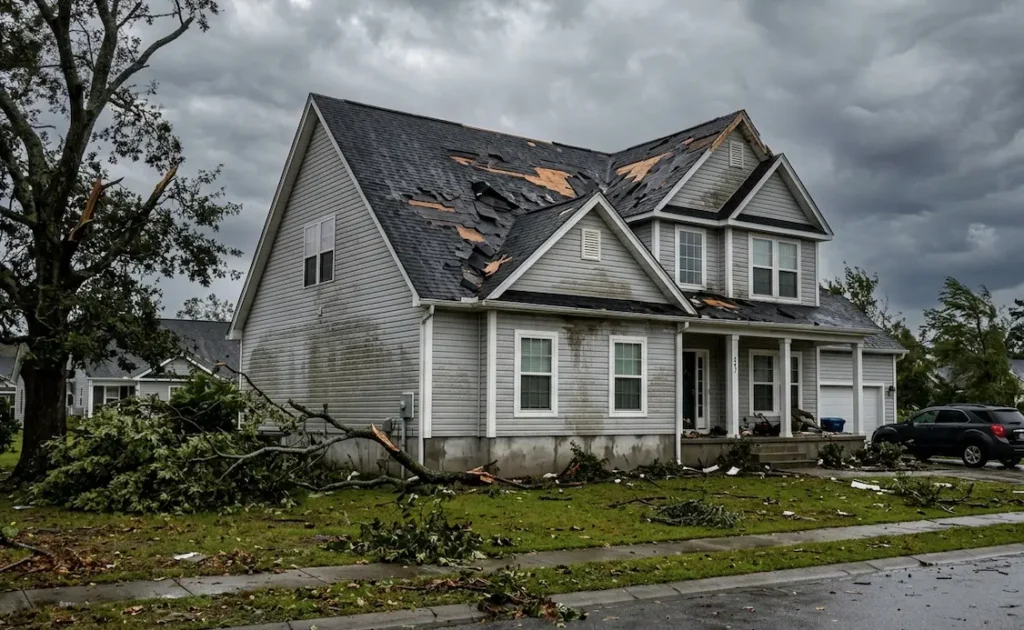
In Peoria IL, the primary storm threats are Midwest thunderstorms and tornado-adjacent wind events that hit hardest from April through June. These storms bring high-speed straight-line winds that lift roof sections, push water through window seals, and drive rain horizontally into siding joints. The Illinois River flooding that often follows a major rain event compounds the damage by pushing groundwater up through foundations just as the roof and walls are already compromised above.
In Gig Harbor WA, the drivers are different. Pacific Northwest atmospheric river events, multi-day heavy rainfall systems, saturate everything over time rather than hitting in a single violent burst. Roof leaks that start as slow seeps during the first day of rain become active intrusion by day three. Crawlspaces and basements take on water gradually, and by the time a homeowner notices visible ceiling staining, the wall cavity and structural framing have been wet for days.
Same end result, water inside the home but the timeline and entry points differ significantly between the two regions.
The First 6 Hours After Storm Damage – What Actually Matters
The first few hours after a storm are when most preventable additional damage happens. Here’s what matters most in that window:
- Document before touching anything – photos and video of every affected area, inside and outside, before any tarps go up or any furniture moves. Insurance adjusters need pre-cleanup documentation to process claims accurately.
- Stop active water entry where safe – emergency tarping over a damaged roof section, boarding a broken window. Stopping the source of water entry is the only meaningful DIY action most homeowners should take.
- Check the attic immediately – in both Gig Harbor and Peoria homes, attic insulation absorbs storm water fast and becomes a hidden reservoir that feeds ceiling damage for days after the storm passes. Wet insulation left in place almost always leads to mold.
- Don’t run HVAC – storm events that involve wind-driven rain can push water into ductwork. Running the system circulates contaminated air through the home and dries nothing effectively.
- Call for professional assessment same day – not the next morning. Water that has entered wall cavities begins its damage clock immediately, regardless of whether the storm is still active outside.
What Storm Damage Does Inside Your Walls
This is the part most homeowners underestimate. The visible damage after a storm, broken shingles, cracked siding, wet carpet is easier to deal with than the invisible damage happening inside your wall cavities and structural framing at the same time.
Professional storm damage repair Peoria IL projects always include moisture testing inside wall cavities because hidden water damage frequently extends well beyond the areas homeowners can actually see.
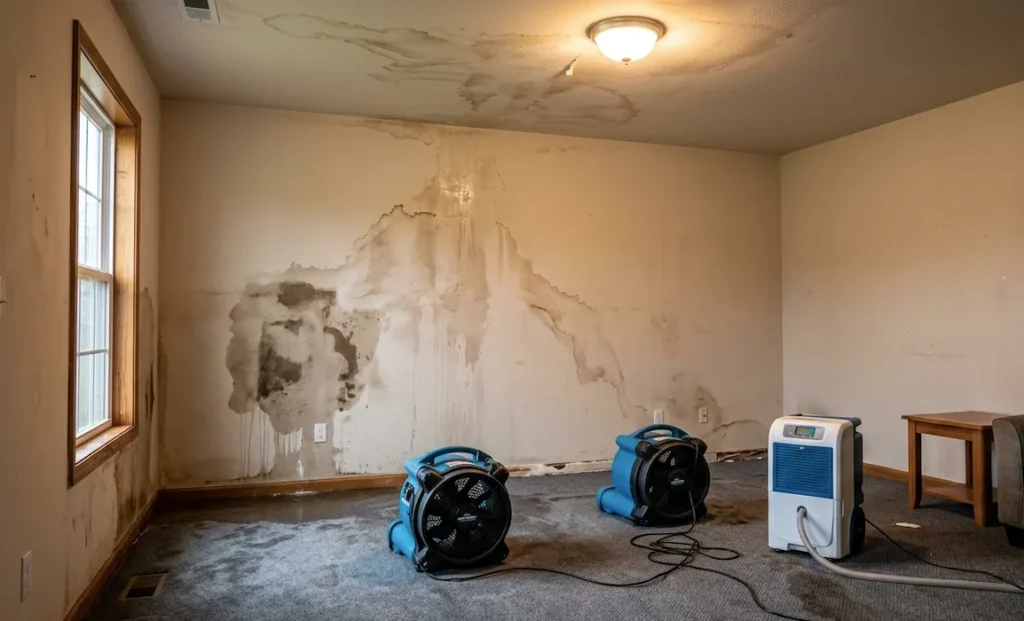
When wind-driven rain penetrates through a roof section or window seal, water doesn’t fall straight down. It follows the path of least resistance through insulation, along framing members, and into wall cavities that can hold moisture for weeks if not professionally dried. Standard household fans move surface air but can’t pull moisture out of wall framing, insulation bats, or concrete block foundations.
Our wall cavity drying service uses specialized equipment, injectidry systems and targeted air mover placement, to extract moisture from inside wall assemblies without removing drywall in every case. This is one of the most important steps in storm damage repair that homeowners most frequently skip, assuming that once the surface feels dry, the job is done.
It isn’t. Moisture readings inside wall cavities are what confirm dryness, not how the surface feels.
Storm Damage and Mold – The 48-Hour Connection
Every storm damage job has a mold risk component. The timeline is the same regardless of whether you’re in Gig Harbor WA or Peoria IL, mold spores present in any indoor environment begin colonizing wet materials within 24 to 48 hours of moisture exposure.
For storm damage specifically, the mold risk is higher than standard water damage because:
- Storm water often carries organic material from outside – soil, debris, roof material that accelerates mold growth on whatever surface it contacts
- Wind-driven rain penetrates at angles, reaching areas like top plates, wall headers, and ceiling joists that don’t get wet in standard plumbing failures
- The stress of a storm event often delays homeowner response, people are dealing with immediate safety concerns, tree removal, power outages, giving moisture more time to establish before professional drying begins
Our moisture detection services use thermal imaging and calibrated moisture meters to map every wet zone in a storm-damaged home, including areas that show no visible damage on the surface. This mapping is what drives equipment placement during the drying phase and what gets documented for insurance purposes.
Roof Damage, Water Entry, and Structural Drying – How They Connect
Storm damage repair in most residential homes follows a connected sequence that homeowners benefit from understanding before they start making calls.
Roof damage is the entry point. Water enters through broken shingles, lifted flashing, or cracked ridge caps, and immediately begins traveling downward through the attic assembly. In Gig Harbor homes with wooden framing and blown insulation, wet attic insulation is one of the fastest sources of secondary damage, it holds water against roof sheathing and framing members for extended periods.
Once water reaches the ceiling plane, it pools at low points and eventually breaches the drywall. What looks like a ceiling stain is usually the last visible sign of water that has already traveled through several structural components above it.
The structural drying process for storm damage works backward from the ceiling, attic first, then ceiling assembly, then wall cavities if water traveled laterally. Running this sequence correctly is what determines whether drywall gets removed or dried in place, and that decision directly affects your total repair cost.
Storm Damage Repair Peoria IL – What Makes the Midwest Different
For homeowners dealing with storm damage repair Peoria IL situations, a few local factors change the response calculus compared to Pacific Northwest events.
Peoria storms tend to be faster and more violent, which means damage is often more concentrated, a specific roof section, a specific wall face, rather than whole-building saturation. The faster the damage event, the more likely water entry is acute and localized, which generally means a faster repair timeline when extraction starts promptly.
The complicating factor in Peoria is what comes after the storm, Illinois River flooding that follows major rain events can raise groundwater levels across the region, turning a roof-damage-only situation into a combined roof-plus-foundation event. Homeowners who address only the visible storm damage without checking for groundwater intrusion in the basement sometimes find a second water problem emerging days after the initial storm event.
According to FEMA’s homeowner guidance on storm preparedness, properties in flood-prone areas should have foundation drainage assessed after any major storm event, not just when visible flooding is present.
Choosing an experienced contractor for storm damage repair Peoria IL helps ensure that moisture mapping, structural drying, and insurance documentation are completed according to industry standards rather than relying only on visible damage.
What to Expect From a Professional Storm Damage Repair Process
A proper storm damage repair job in either region follows a consistent sequence:
- Initial assessment and moisture mapping – all affected areas documented before any work begins
- Emergency stabilization – tarping, boarding, water extraction if standing water is present
- Structural drying – equipment placed based on moisture map, daily readings tracked
- Material evaluation – what can be dried in place versus what needs removal
- Reconstruction – drywall, insulation, roofing, and finishing work after drying confirms complete
For homeowners in the greater Gig Harbor area, including communities like Tacoma, this process typically runs two to four weeks for moderate storm damage and longer for events involving both roof damage and interior water intrusion.
Documentation throughout every phase is what makes the difference during insurance claim review, adjusters want moisture logs and daily readings, not just before-and-after photos.
Final Thought – Storm Damage Gets More Expensive the Longer It Waits
Delaying storm damage repair Peoria IL services after severe weather almost always increases restoration costs because hidden moisture continues damaging structural materials long after the storm has passed.
If you’ve had storm damage in the Gig Harbor area, call (253) 247-4517 – our team responds 24/7 and can have assessment and extraction equipment on site the same day.
Leave a Reply